30 October 2026Deniz Bulut
The real work starts after the mock test: how to keep an error log
Don’t just check your score and move on. A practical guide to an error log that sorts mistakes by type and catches the ones you keep repeating in exam prep.
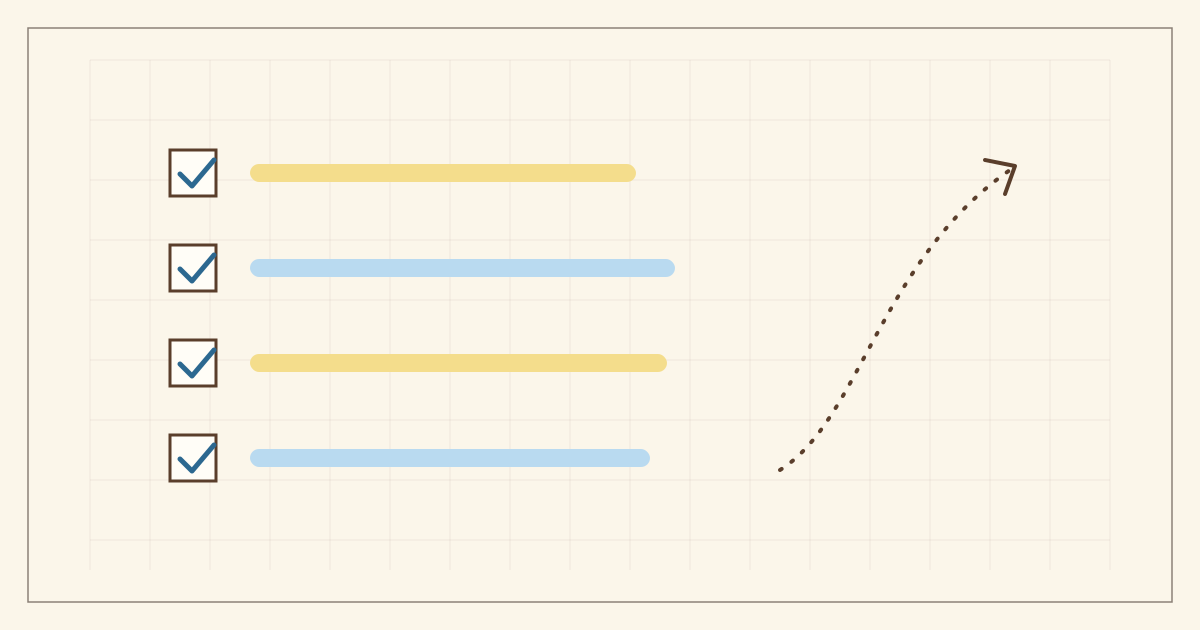
The mock test ends, the answer key comes out, the score is calculated and the booklet goes onto a pile. When I start working with a new student, I see this scene almost every time. Yet in my view, the most valuable part of a mock test doesn’t begin when you mark the last answer. It begins when you open the booklet again.
Your score only answers the question “how much?” The answer to “why?” is hidden inside your wrong and blank answers. In this post I’ll walk you through the error log method I use with my students, whether they are preparing for the LGS (Turkey’s high school entrance exam), the YKS-TYT (the first stage of the university entrance exam) or the ALES (the exam for graduate programmes).
Track the reason, not just the score
Imagine two mock tests, each with five wrong answers. The score looks the same, but in one the mistakes might come from carelessness and in the other from a topic you haven’t learned yet. Those two situations need completely different fixes. In the first, studying more content won’t help much; in the second, telling yourself to “be more careful” won’t change anything.
That’s why I ask students to start with a different question than “what was my score?”: “Why did I miss this one?” Answer it honestly, and next week’s study plan almost writes itself.
Sort your mistakes into four boxes
Put every wrong and blank answer into one of these four groups. If a question fits two boxes, choose the reason that feels most true.
- Knowledge gap: I didn’t know the topic or rule, for example a spelling rule or a type of sentence error.
- Reading slip: I misread the question. I missed a “not”, or read “cannot be concluded” as “can be concluded”.
- Method slip: I knew the material but approached the question from the wrong angle, or rushed while eliminating two options that both looked right.
- Time and focus slip: I ran out of time, marked the wrong bubble on the answer sheet, or read the question only halfway because I was tired.
Do this over a few mock tests and you’ll start to see which box is always full. That’s where the real information is.
What goes into the error log?
Your error log doesn’t need to be fancy; a plain notebook or a few sheets of paper will do. What matters is that every entry follows the same pattern. For each question, I suggest these five lines:
- The name and date of the mock test, and the question number.
- A short summary or a photo of the question (no need to copy it out in full).
- Your answer and the correct answer.
- The type of mistake: knowledge, reading, method, or time and focus.
- What will I do next time? One sentence, in your own words.
The fifth line is the heart of the log. Instead of something vague like “I need to be careful”, write a concrete action such as “I’ll underline any negative word in the question stem.” Concrete sentences come back to you in the exam room; vague warnings don’t.
Log the lucky guesses too
Most students only look at their wrong answers. But the questions you got right “by luck” matter just as much, because the same guess may not work next time. During the test, put a small question mark next to anything you weren’t sure about. When you check your answers, add these to the log as well, with the note “wasn’t sure” instead of a mistake type.
Connect the log to your study plan
A log that fills up and sits on a shelf doesn’t help anyone. After each mock test, count your boxes and set one small goal for the week based on the fullest one:
- If knowledge gaps lead: review that topic briefly and solve a handful of similar questions.
- If reading slips lead: build the habit of underlining the key word in every question stem.
- If method slips lead: when solving similar questions, explain out loud or on paper why you are ruling each option out.
- If time and focus slips lead: sit your mock tests in conditions close to the real exam, and fill in the answer sheet at regular intervals rather than all at once at the end of a section.
The number of questions, the time allowed and the session layout of these exams can change from year to year, so check the latest official MEB or ÖSYM guide when you plan your practice tests.
Review it: a log is a tool, not an archive
The real power of an error log shows up when you go back to it. Once a week, set aside about half an hour to look through earlier entries. Try to solve the questions you summarised again without looking at the answer. When you get an entry right twice in a row, mark it: that mistake is now behind you.
A small note for parents: an error log is not a list of failures. When you open it together with your child, focusing on the “what will I do next time?” line rather than on how many mistakes there are makes the log a safe place for them.
A small exercise to try this week
This week, reopen the last mock test you took. Sort your wrong and blank answers into the four boxes and write a one-sentence “next time” note beside each one. Then look at the fullest box and set just one concrete goal for the next seven days. After your next mock test, check whether that box is a little emptier.
If you’d like to work out together which mistakes keep catching you in Turkish questions, and build a study plan that suits you, feel free to leave me a short message through the contact form. We can talk about the path that fits you or your child best.